

Take control of your inbound content, with zero room for mistakes or chaos
Launchpad is VIDA’s secure ingest layer for VIDA Content OS.
A guided upload work flow that moves large files fast (with Aspera), gets the right metadata during submission, and applies the checks you define.
No more searching to find missing files, no more translating spreadsheets into metadata, and especially no more last-minute problems after content’s already in motion.
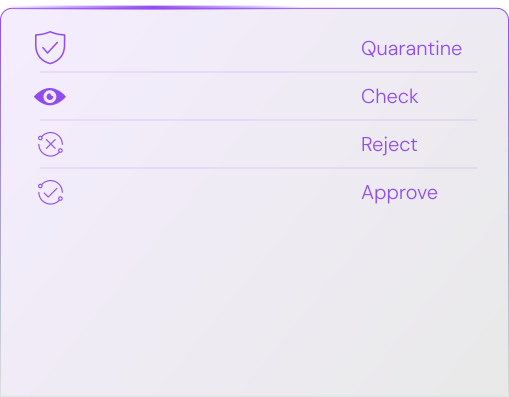
Before files reach your library, Launchpad can
quarantine, check, reject, or accept them
It sends your team predictable intake and metadata,
all within VIDA
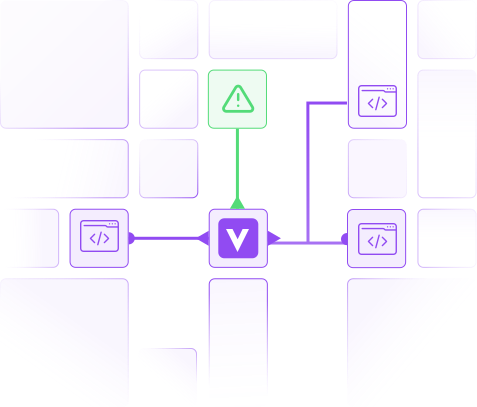
And your downstream workflows will start
clean every time
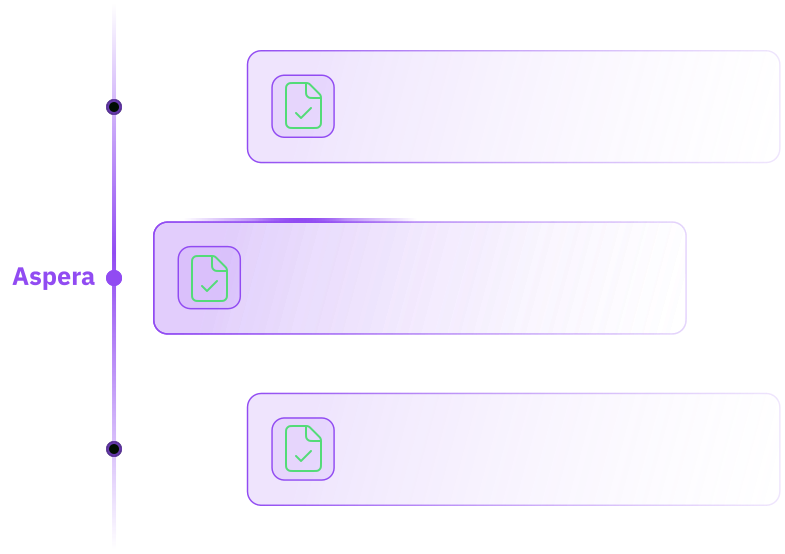
Launchpad serves as a checkpoint for new content entering your system. It sets consistent standards for incoming deliveries, ensures they function properly, and starts VIDA with clean inputs. Launchpad addresses the chaotic reality of daily inbound deliveries (different suppliers, varying formats, and inconsistent quality), all of which need to be entered into a single system without slowing down your media company.
Launchpad lets contributors follow a guided submission path while your in-house team has a controlled checkpoint before anything crosses the VIDA Content OS borders. Uploads are fast for large files, and the right information (the info you really need to be in place) is collected at the time of delivery, when contributors still know what they’re sending. Governance in place, before content lands in your platform Each delivery arrives in a consistent shape, with fewer exceptions to chase and fewer fixes to make later. VIDA Content OS receives content that’s ready to be governed, routed, and distributed, not cleaned up first.
it most often happens across too many steps during the handoff
If you work with many vendors and contributors, you’ve seen the same patterns repeat themselves.
The files arrive, but they don’t come as a delivery
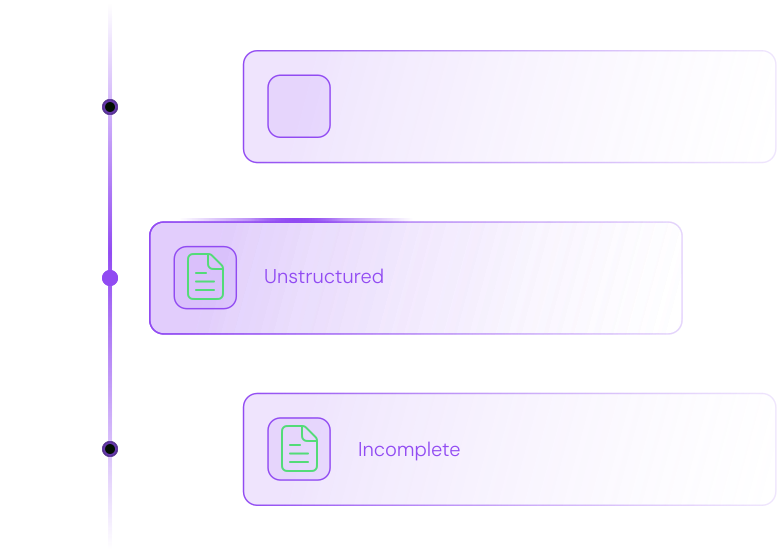
a few items are somehow missing
a version or two is unclear
the folder structure reflects how one supplier thinks, but not how your team operates
metadata is partial, inconsistent, or sitting in a spreadsheet that doesn't match the files
It becomes more difficult to keep standards consistent without slowing everything down.
➔ Ops teams chasing clarification
➔ Relabelling assets
➔ Rebuilding metadata
➔ Applying governance after content has already entered the system
This is why ingest matters. It's the point where you either capture requirements early and keep the pipeline clean, or you accept "we'll fix it later" as an operating model.
In media operations, the first step matters more than people admit. If content enters the system late, incomplete, or inconsistently labeled, everything downstream slows down.
Automation becomes unreliable, metadata has to be rebuilt, and risk increases as more people touch the same assets to “make them usable.” That’s not a tooling problem. It’s an entry problem.
Keep suppliers consistent by using pre-set configurations for common delivery types and formats
Large deliveries arrive fast, so teams can start work immediately instead of waiting on uploads
Make one metadata change across many assets, avoiding repetitive edits and the admin overhead

Bring in entire drops at once, even at a high volume, without breaking deliveries into workarounds

Before files reach your library, Launchpad works to quarantine, check,reject, or accept them
Assets enter the system already labeled, which reduces the cleanup and makes routing possible from the beginning

Files move safely from external parties into your environment without relying on consumer file-sharing tools
Control who can upload, view, and manage content by user group and responsibility

Catch missing or incorrect inputs while the delivery is happening, not after it’s already downstream

Shape the intake process to fit your team’s standards, approvals, and delivery patterns

See what’s delivered, what’s pending, and what needs attention without chasing contributors
Launchpad is used for large, time-sensitive drops, where suppliers need to upload quickly, and teams need confidence that everything arrived. It supports bulk submissions and a workflow that remains usable even when multiple parties are delivering in parallel.
Teams use Launchpad as a checkpoint before the library: invite different suppliers to deliver specific content types, track completion in one place, and confirm each submission meets the rules that matter (what’s required, what’s missing, and what’s acceptable). Instead of “we’ll fix it later,” validation happens at the handoff before content becomes operational.
Launchpad collects required metadata during submission, so the information that makes content usable isn’t scattered across spreadsheets or follow-up emails. Templates help keep fields consistent across suppliers and recurring delivery types, and batch updates make it practical to adjust metadata across a drop when requirements change.
When inbound content is meant for onward packaging or distribution, Launchpad reduces the steps needed between “files received” and “ready to move”. Once checks and approvals are complete, the right assets can advance without additional manual handoffs, keeping coordination manageable as contributor networks grow.
Launchpad is a companion product to VIDA Content OS, designed for one clear job: managing what happens before content enters your core library.VIDAContent OS is where content is governed and operationalised across its lifecycle. Launchpad sits in front of it as the inbound layer for supplier and contributor deliveries. External parties upload into Launchpad, your team enforces the standards you care about(required metadata, basic validation, and delivery completeness), and only approved submissions flow into VIDA Content OS.Thisprevents overlap and keeps responsibilities clean. Launchpad is the first step in a VIDA workflow when content originates outside your team, acting as a controlled gateway into VIDA Content OS.
We built Launchpad to make moment zero predictable.Suppliers deliver through a controlled intake, VIDA captures metadata while context is still fresh, and all the basic checks are done before the content becomes operational. For you, that means fewer exceptions, less need for manual cleanup, and a safer path into your library.See Launchpad in your ingest workflow.